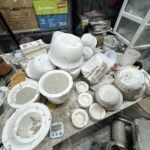
Mixing plaster correctly is one of the most critical skills in mold making and slipcasting. Too little water and the plaster sets too fast and becomes brittle; too much and it won’t reach proper hardness. Getting the ratio right every time requires understanding the basic principles — and using a reliable calculator takes the guesswork out entirely.
Why the Water-to-Plaster Ratio Matters
Plaster of Paris (pottery plaster #1 is the standard for ceramic molds) requires a specific ratio of water to plaster by weight to achieve the correct hardness and porosity. The ratio is usually expressed as the weight of water per 100 parts of plaster:
Consistency 60–65 (60–65g water per 100g plaster) — very hard, less porous. Good for press molds and stamps.
Consistency 68–72 (standard pottery plaster #1 ratio) — balanced hardness and porosity. The standard for most slipcasting molds.
Consistency 75–80 — softer, more porous. Absorbs slip faster but wears out sooner.
Download: Water to Plaster Calculator
Use the downloadable calculator below to work out exactly how much water and plaster you need for any mold volume. Enter the volume of your mold in cubic inches or cubic centimeters and the calculator returns the exact weights of water and plaster needed at your chosen consistency.
Measure your water first — always add plaster to water, never water to plaster. Use room temperature water.
Sift the plaster in slowly — sprinkle plaster over the surface of the water evenly. Don’t dump it all in at once or you’ll get lumps.
Let it slake — allow the plaster to absorb the water for 2–3 minutes without stirring. You’ll see it sink below the surface.
Mix thoroughly — stir slowly from the bottom up for 3–5 minutes. Avoid whipping in air bubbles. A slow, deliberate mixing motion is ideal.
Pour before it sets — plaster begins to set 10–15 minutes after mixing. Pour into your mold form promptly and tap to release air bubbles.
Wait for the heat to pass — plaster generates heat as it sets (the exothermic reaction). Once the mold has cooled back to room temperature, it’s safe to demold.
Common Plaster Mixing Mistakes
Adding water to plaster — always the reverse. Water first, then plaster.
Mixing too fast — incorporates air bubbles that weaken the mold and create pinholes on the mold surface
Using contaminated water — even small amounts of old plaster in your water bucket can accelerate setting time dramatically. Always use clean water.
Letting plaster sit too long before pouring — if plaster starts to thicken before you pour, discard it and start fresh. Never add water to extend working time.
I am a visually impaired ceramic artist. I have been making for around 8 years now. I specialize in functional colorful pottery. Mainly nerikome and other decorative processes.