Paper Clay Slip: How to Make It and Use It for Repairs and Joins
How to make paper clay slip and use it for repairs — fixing cracks at leather-hard and bone dry, adding handles to dry pieces, and why it works when standard slip won’t.
Built to be held. Made to last.

How to make paper clay slip and use it for repairs — fixing cracks at leather-hard and bone dry, adding handles to dry pieces, and why it works when standard slip won’t.
Clay is a surprisingly durable material when stored correctly — it can last for years without degrading. But improper storage can lead to clay that is too stiff to work, …
I use ram’s head wedging for smaller amounts of clay and spiral wedging for larger amounts. Ram’s head wedging is like kneading dough — except instead of making it more …
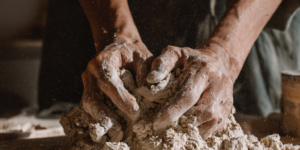
What paper clay is, the capillary action science behind why dry-to-wet joins work, Graham Hay and Rosette Gault’s contributions to the modern paper clay movement, benefits, limitations, and when to use it.

How to Recycle Clay: Step-by-Step Guide Recycling clay is an essential skill for pottery enthusiasts looking to reduce waste and save on materials. With just a few simple tools and …

The Complete Guide to Slipcasting: How to Create Stunning Ceramics Using This Centuries-Old Technique If you’re a fan of ceramics, you’ve likely heard of slipcasting. This timeless technique has been …
How to make paper clay from scratch — the paper pulp process, fiber ratio (20% by volume), combining pulp with clay slip, drying down to working consistency, and storage.
High-fire clay bodies are formulated to withstand extreme kiln temperatures — typically cone 8 through cone 10 (approximately 2300–2380°F / 1260–1305°C). At these temperatures, clay bodies vitrify significantly, producing ware …
You can make colored clay a few different ways. Materials Steps 2. Put it in the gallon plastic bag 3. Use the mallet to smash the clay into a fine …
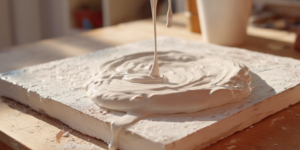
Clay reclaim is one of the most important studio habits you can develop. Every scrap, failed piece, and trimming that hasn’t been fired can be returned to a fully workable …
✈️🚚🚛 Free shipping on all orders over $50+!📦