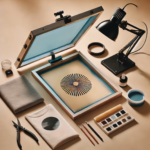
Wax resist is a glazing and decorating technique where wax is applied to ceramic surfaces to prevent glaze or slip from adhering. Wherever the wax is, glaze won’t stick — leaving that area bare, or revealing a color underneath. It’s one of the most versatile resist methods because it works at multiple stages: over bare bisqueware, over a fired glaze layer, or between glaze coats.
Types of Wax Resist
Liquid Wax Emulsion
The most common studio option. Water-based liquid wax sold specifically for ceramics. Easy to brush on, dries quickly, and burns off cleanly in the kiln. Available from ceramic suppliers. Dilute with a small amount of water if it’s too thick to brush smoothly.
Hot Wax (Batik Wax / Paraffin)
Melted paraffin or batik wax applied with a brush or tjanting tool. Penetrates the bisqueware surface more deeply than emulsion wax, giving a sharper resist edge. Requires a wax pot or double boiler to keep the wax liquid. More involved setup but excellent for fine detail work.
Candle Wax / Crayons
A quick low-tech option. Rub a candle or wax crayon directly onto the ceramic surface. Coverage is inconsistent and the wax doesn’t penetrate deeply, so resist edges are softer. Good for loose, textured effects but not for precise pattern work.
How to Use Wax Resist
1. Apply Wax to the Desired Areas
Brush the wax emulsion onto bisqueware wherever you want glaze to be repelled. Common uses: the foot ring (to keep it glaze-free so it doesn’t stick to the kiln shelf), the inside of lids where they contact the pot, decorative patterns, and any area where two glazes should stay separate.
Tip: Use a dedicated brush for wax — it’s nearly impossible to remove completely from bristles. Label it clearly.
2. Let the Wax Dry
Let liquid wax emulsion dry fully before applying glaze — usually 5–10 minutes. It should feel dry to the touch and slightly waxy. If you apply glaze before the wax is dry it will absorb into the wax and the resist won’t work cleanly.
3. Apply Glaze Over the Wax
Dip, pour, or brush glaze over the waxed surface. The glaze beads up and rolls off wherever the wax is. A light pass is enough — don’t scrub the glaze onto waxed areas or you’ll break through the resist.
4. Clean Up Edges
Glaze sometimes catches slightly at the wax boundary. Once the glaze has dried, clean up any rough edges by scraping gently with a fingernail or the back of a knife. Don’t wipe with a wet sponge — it drags the resist.
5. Fire as Normal
The wax burns off completely in the kiln during the early stages of firing, leaving the ceramic surface clean and glaze-free in the resist areas.
Decorative Techniques
Two-Color Layering
Apply a base glaze coat, let it dry, wax over the areas you want to stay that color, then apply a second glaze color over the whole piece. The second glaze adheres everywhere except where the wax is. After firing, the waxed areas show the first color; unwaxed areas show the second — or a blend where the glazes overlapped.
Wax Over Underglaze
Apply underglaze decoration to bisqueware, let it dry, then wax over the whole decorated area before dipping or pouring a transparent glaze. The wax protects the underglaze from being disturbed during dipping and keeps the glaze layer even.
Pattern Work
Paint wax in lines, dots, or patterns onto bisqueware, then apply a contrasting glaze. The wax pattern fires as unglazed clay against the glazed background. Works particularly well with matte glazes where the contrast between the bare clay and the glazed surface is distinct.
I am a visually impaired ceramic artist. I have been making for around 8 years now. I specialize in functional colorful pottery. Mainly nerikome and other decorative processes.