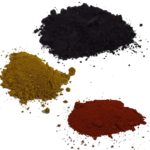
Rutile is one of the most distinctive and unpredictable materials in the ceramic glaze palette. Unlike pure colorants that produce consistent, flat color, rutile creates complex, variegated surfaces — streaks, halos, and crystalline effects that shift with kiln atmosphere and firing temperature. Understanding how rutile behaves gives you a powerful tool for developing expressive, lively glazes.
What is Rutile?
Rutile is a naturally occurring mineral composed primarily of titanium dioxide (TiO₂) combined with iron oxide (FeO). It is not a pure synthetic colorant but a variable natural material — meaning its exact composition, and therefore its behavior in glazes, can vary between suppliers and even between batches. Light rutile contains more titanium dioxide and less iron; dark rutile contains more iron oxide and produces stronger color effects.
Rutile melts at approximately 3317°F (1825°C) — well above typical ceramic firing temperatures — so it doesn’t melt on its own but instead disperses through the glaze melt, influencing color and surface texture.
What Does Rutile Do in Glazes?
Variegation and Streaking
Rutile’s most characteristic effect is variegation — a streaky, mottled, or layered appearance within the glaze surface. As the kiln heats up, the titanium and iron components of rutile separate and migrate differently through the molten glaze, creating visual movement and depth. No two pieces come out exactly the same, which is part of rutile’s appeal.
Color Effects
Depending on the glaze base and firing atmosphere, rutile can produce:
Cream and tan tones — in oxidation with a clear or light base glaze
Blue and blue-grey effects — particularly in reduction, or when rutile interacts with cobalt or other colorants
Warm amber and brown — when the iron content dominates, especially at higher temperatures
Crystalline halos — in slow-cooled or well-developed glazes
Opacification
Rutile acts as a partial opacifier due to its titanium dioxide content. It won’t produce the bright white opacity of zircopax or tin oxide, but it will cloud a transparent glaze and contribute to surface texture. Mixed with 50% frit, rutile is often used as a wash applied over an existing glaze to add a surface layer of color and variegation.
Rutile vs Ilmenite
Rutile and ilmenite are related titanium minerals, not the same material refined to different degrees. Ilmenite (FeTiO₃) contains more iron and less titanium dioxide than rutile, and produces coarser, more speckled effects. Rutile is more refined and consistent. Both are available in ceramic supply stores, and both produce the characteristic variegated effects associated with this mineral family.
How to Use Rutile in Glazes
As a colorant addition: Add 2–8% rutile to an existing glaze base. Start low and test — rutile’s effects are amplified at higher percentages and can overwhelm a glaze.
As a wash: Mix rutile with 50% frit and water to a thin consistency and apply over a fired or unfired glaze for a surface layer of color and texture.
In combination with other colorants: Rutile interacts dramatically with cobalt (producing blues and blue-greys), iron oxide (deepening amber and brown tones), and titanium dioxide (amplifying the crystalline effects).
Firing atmosphere matters: Rutile behaves very differently in oxidation vs reduction — always test in your own kiln before committing to a full batch.
I am a visually impaired ceramic artist. I have been making for around 8 years now. I specialize in functional colorful pottery. Mainly nerikome and other decorative processes.