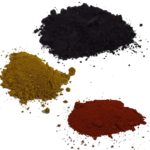
Praseodymium oxide is a rare earth colorant that on its own has limited use in ceramics, but plays an important role in commercial yellow stains — particularly the bright, stable yellows used in mid and high-fire glazes. Understanding how praseodymium works helps you choose the right stain for your palette and use it effectively.
What is Praseodymium Oxide?
Praseodymium oxide (PrO₂) is classified as a rare earth oxide — part of the lanthanide series on the periodic table. It has a characteristic green color in its raw state but acts as a weak colorant on its own in ceramic glazes. Its melting point is approximately 1710°F (932°C), which means it can participate in glaze melts at mid and high-fire temperatures.
Praseodymium oxide is slightly soluble in water and considered toxic — handle with appropriate respiratory protection and follow safe glaze handling practices when working with materials containing it.
Praseodymium in Yellow Ceramic Stains
The primary application of praseodymium in ceramics is in combination with zirconium silicate to create bright, stable yellow stains. This praseodymium-zirconium yellow is one of the most lightfast and thermally stable ceramic yellows available — it holds its color reliably through mid and high-fire temperatures and in both oxidation and reduction atmospheres.
Common commercial stains containing praseodymium include Mason stains 6433, 6405, and 6407 — all in the yellow family. These stains are the practical way most potters work with praseodymium, rather than using the raw oxide directly.
How to Use Praseodymium Yellow Stains
- Addition rate: Typically 5–15% stain addition to a base glaze. Start at 8–10% and adjust based on test results.
- Base glaze compatibility: Praseodymium yellows work best in zinc-free, low-titanium base glazes. Zinc and titanium can shift or mute the yellow color.
- Firing range: Reliable from cone 06 through cone 10 — one of the few yellows that holds up at high fire.
- Atmosphere: Stable in both oxidation and reduction, though reduction can slightly shift the tone.
Praseodymium vs Other Yellow Colorants
Yellow is one of the most difficult colors to achieve in high-fire ceramics. Many yellows that work at low fire break down or shift at cone 6 and above. Praseodymium-zirconium yellow is one of the exceptions — it remains a reliable option where other yellows fail. Alternatives include vanadium-zirconium yellow stains, which tend toward a more muted, greenish yellow, and iron oxide in specific glaze chemistries, which produces warm amber-yellow tones rather than bright yellow.
For more on ceramic colorants and how they behave in glazes, see our Colorants and Glaze Testing guide and our overview of What Are Mason Stains.