Clay moves through a predictable series of states as it loses water and then gains permanence in the kiln. Knowing which stage you are in tells you what you can do to a piece — when to attach a handle, when to carve, when to stop touching it, and when it is finally safe to use. Here is each stage, what is happening to the clay, and what it is good for.
Greenware: every stage before the first firing
Greenware is the catch-all term for clay that has not yet been fired. From wet slip to bone-dry, if it has not been through the kiln, it is greenware. Everything in this section is greenware — the term simply distinguishes unfired clay from bisque and glaze-fired ware. Greenware is reclaimable: anything that has not been fired can be returned to slip and used again (see How to Reclaim Clay).
Slip
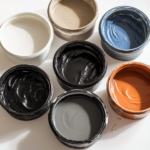
Slip is clay in its most fluid state — clay suspended in water. It is what comes off your hands when you throw. You can make it by letting thin sheets of clay dry bone-dry, then rehydrating them. Slip is the basis for sgraffito, mishima, slip trailing, and other slip decoration.
Soft clay
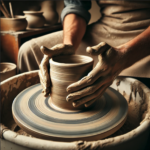
Soft clay is fresh from the bag — the best state for throwing on the wheel, making pinch pots, and rolling slabs. It holds water, moves easily, and forgives.
Soft leather-hard
The clay is still damp but firm enough to pick up without distorting. This is the best stage to attach appendages — handles, spouts, feet — and to join pieces by slipping and scoring. Moisture levels still match well between parts, so joins are reliable.
Leather-hard
Between soft and stiff leather-hard. Some moisture remains but not much. You can handle the piece freely without distorting it, which makes this the ideal stage for trimming, carving, and sgraffito.
Stiff leather-hard
Nearly bone-dry, with only a trace of moisture left. Carving and refining are still possible, but the window for adding wet clay is closing — joins made now are prone to cracking as the wetter addition shrinks against the drier body.
Bone-dry
No moisture remains, and the piece is at its most fragile — this is the stage most likely to chip or snap from careless handling. It is also the final stage before bisque firing. Bone-dry ware must be fully dry before it goes in the kiln: any trapped moisture turns to steam and can crack or burst the piece. If you need to slow drying so a piece reaches this stage evenly, a damp box helps.
Bisque: the first firing
Bisque is the stage after the first firing, which converts fragile bone-dry clay into a hard, porous ceramic. Most clay is bisque fired to cone 04 (about 1945°F / 1063°C) regardless of its final glaze temperature. Bisqueware is far less fragile than bone-dry greenware — you can handle it normally — but joints and added appendages remain weak points, so still avoid lifting a piece by its handle.
The reason for firing bisque first is practical: the ware is porous enough to absorb glaze but hard enough to handle during glazing without breaking down. For how this firing works, see the Kiln Firing Guide and Understanding Cone Numbers.
Glaze-fired: finished ware
The final firing melts the glaze and vitrifies the clay body — the point where it becomes dense, durable, and (for a tight body) functionally non-porous. Glaze colors complete their chemical reactions and the surface sets as gloss, satin, or matte. This is when a functional piece is finally ready to use. For what vitrification actually means and why absorption rate matters, see What is Vitrification in Ceramics?
Related Guides
- Understanding Cone Numbers
- Kiln Firing Guide: Bisque, Glaze, Schedules, and Cooling
- What is Vitrification in Ceramics?
- How to Reclaim Clay