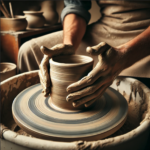
Functional ceramics covers a wide range of forms. Knowing the categories helps you plan your practice, develop consistent skills in specific areas, and think about what you actually want to make. This guide breaks down the main vessel types made in studio pottery — what they are, what they’re used for, and what technique typically suits each form.
Drinking Vessels
Mugs
The most common studio pottery form. Wheel-thrown or handbuilt, with a pulled, slab, or extruded handle. Size ranges from espresso (3–4 oz) to oversized (20+ oz). The body shape and handle style define the feel of the piece. See: Throwing a Mug.
Cups and Yunomi
Smaller drinking vessels, typically without handles. Yunomi are Japanese-style tea cups — taller and narrower than a Western mug, trimmed with a raised foot ring. Cups and tumblers are wider and shorter. Both are usually wheel-thrown.
Espresso and Demitasse Cups
Small cups (2–4 oz) with a loop or thumb handle. Require precise throwing — small forms amplify uneven walls. Often paired with a saucer.
Goblets
A stemmed drinking vessel. The cup and stem are typically thrown separately and joined at leather-hard. The foot can be thrown or handbuilt.
Bowls
Serving and Eating Bowls
The most varied bowl category — rice bowls, soup bowls, pasta bowls, cereal bowls, ramen bowls. Size and curve determine function. Wide, shallow bowls suit salads and sharing; deep, narrower bowls hold heat better for soups and noodles. See the full guide: How to Throw a Bowl.
Tea Bowls (Chawan)
A wide, low bowl used for preparing and drinking matcha. One of the most important forms in Japanese ceramics. Heavily influenced by wabi-sabi aesthetics — slight asymmetry, textured surface, visible foot ring, and an intentional relationship between form and glaze.
Mixing and Baking Bowls
Functional bowls built for kitchen use — thicker walls, stable base, sometimes with a spout or handle. Need to be food-safe and thermally stable if used for baking.
Plates and Platters
Plates
One of the most technically demanding forms — wide, flat surfaces are prone to warping and S-cracks. Made by wheel throwing, slab rolling, or over a hump mold. The foot ring placement is critical for preventing warping during firing. See: How to Make a Ceramic Plate.
Platters and Serving Trays
Larger flat forms, often oval or rectangular. Usually slab-built or thrown and altered. Handles can be added for easier carrying.
Pouring Vessels
Pitchers and Jugs
Wheel-thrown with a pulled or pinched spout and an attached handle. The spout shape determines how cleanly the vessel pours — a sharp, pulled lip minimizes drips.
Teapots
The most complex functional form — body, lid, spout, and handle must all work together. The spout opening and filter holes need to be sized correctly for a clean pour. Usually thrown in parts and assembled at leather-hard.
Creamers and Small Pourers
Small pouring vessels (4–8 oz). Often made as part of a set with a mug or teapot. The spout needs to be functional at small scale — a common challenge for beginning potters.
Storage and Covered Forms
Jars with Lids
Canisters, spice jars, honey pots, and storage containers. The lid fit is the technical challenge — the lid and jar need to be thrown to matching measurements and allowed to shrink at the same rate.
Casseroles and Baking Dishes
Functional baking vessels — oven-safe, thermally durable, with a fitted lid. Usually slab-built or thrown and altered into oval or rectangular forms. Need a clay body tested for thermal shock resistance.
Vases and Plant Vessels
Vases
From small bud vases to large floor vases. Wheel-thrown for symmetrical forms; coil-built or slab-built for large or irregular shapes. The opening size and neck profile determine what kinds of flowers or arrangements work in the piece.
Planters
Functional plant containers — need drainage holes added before firing. Wall thickness matters for outdoor planters that face frost; thicker walls and vitrified clay bodies handle freeze-thaw cycles better.
Technique by Form
| Form | Common Technique |
|---|---|
| Mugs, cups, bowls, vases | Wheel throwing |
| Plates, trays, boxes | Slab building or hump mold |
| Large vases, sculptural vessels | Coil building |
| Identical production pieces | Slipcasting |
| Teapots, lidded forms | Wheel throwing (parts assembled) |
| Small, organic forms | Pinch pot |